
You just took a pregnancy test. Maybe you took three. And now you’re sitting with news that has completely shifted how you see the next few months—and maybe the next few years—of your life.
Processing your own feelings is hard enough. But somewhere underneath all of it, one thought keeps surfacing: I have to tell my parents.
For many women, that conversation feels more terrifying than anything else about an unplanned pregnancy. What will they say? Will they be angry? Disappointed? Will they try to take over your decisions? Will they make you feel ashamed for something that already feels so overwhelming?
These fears are completely valid. And they’re totally normal. Almost every woman facing an unexpected pregnancy has felt exactly what you’re feeling right now—the dread of sharing the news with the people whose opinions matter most.
Here’s the truth: the conversation will probably be hard. There’s no script that makes it easy. But it is survivable—and in most cases, it leads somewhere better than you’re currently imagining. This post will help you figure out how to tell your parents you’re pregnant, what to expect when you do, and how to hold on to your own voice throughout.
Why Telling Your Parents Feels So Hard
Before we get into the practical side of how to tell parents about an unplanned pregnancy, let’s just sit with this for a moment.
This isn’t just a logistical challenge. It touches some of the deepest fears we carry: the fear of disappointing people we love, the fear of judgment, the fear of losing support, the fear of no longer being seen the way we want to be seen.
For some women, the fear is a parent who will react with anger. For others, it’s the quiet devastation of seeing disappointment cross someone’s face. For others still, it’s the fear of a parent who will immediately try to make your pregnancy decision for you—who will tell you exactly what to do and make it feel like your choices are being stripped away.
Whatever your specific fear is, it’s valid. And knowing what you’re actually afraid of can help you prepare more honestly for the conversation ahead.
Many young women in this situation also carry guilt about the impact the news will have on their family—worrying more about everyone else’s feelings than their own. If that sounds familiar, take a deep breath. You are allowed to need support right now. That’s not a burden. That’s being human.
Before You Share the News: How to Prepare
Process your own feelings first—but don’t wait too long
There’s a real tension here. You deserve time to sit with this before you have to manage everyone else’s reactions. But waiting too long can make sharing the news harder, not easier. Pregnancy doesn’t pause, and telling your parents earlier generally gives everyone more time to adjust and support you.
A reasonable window is a few days to a couple of weeks. Enough time for the initial shock of the pregnancy test to settle, but not so long that you’re carrying this completely alone.
Know where you stand before you walk in
You don’t have to have all the answers. You don’t need to know what you’re going to do yet. Your unplanned pregnancy options are something you can explore after the conversation—not before it. But it helps to know what you need from this particular moment.
Are you looking for support? Information? Just to be heard without judgment? Are you hoping to figure things out together, or do you need to feel like the pregnancy decision is yours to make? Knowing what you need helps you guide the conversation—and helps you recognize when it’s going off track.
Think about the right time and place to tell your parents
Timing and setting matter more than most people realize. This is not a conversation for the dinner table with everyone present, or in the car, or right before someone has to leave for work.
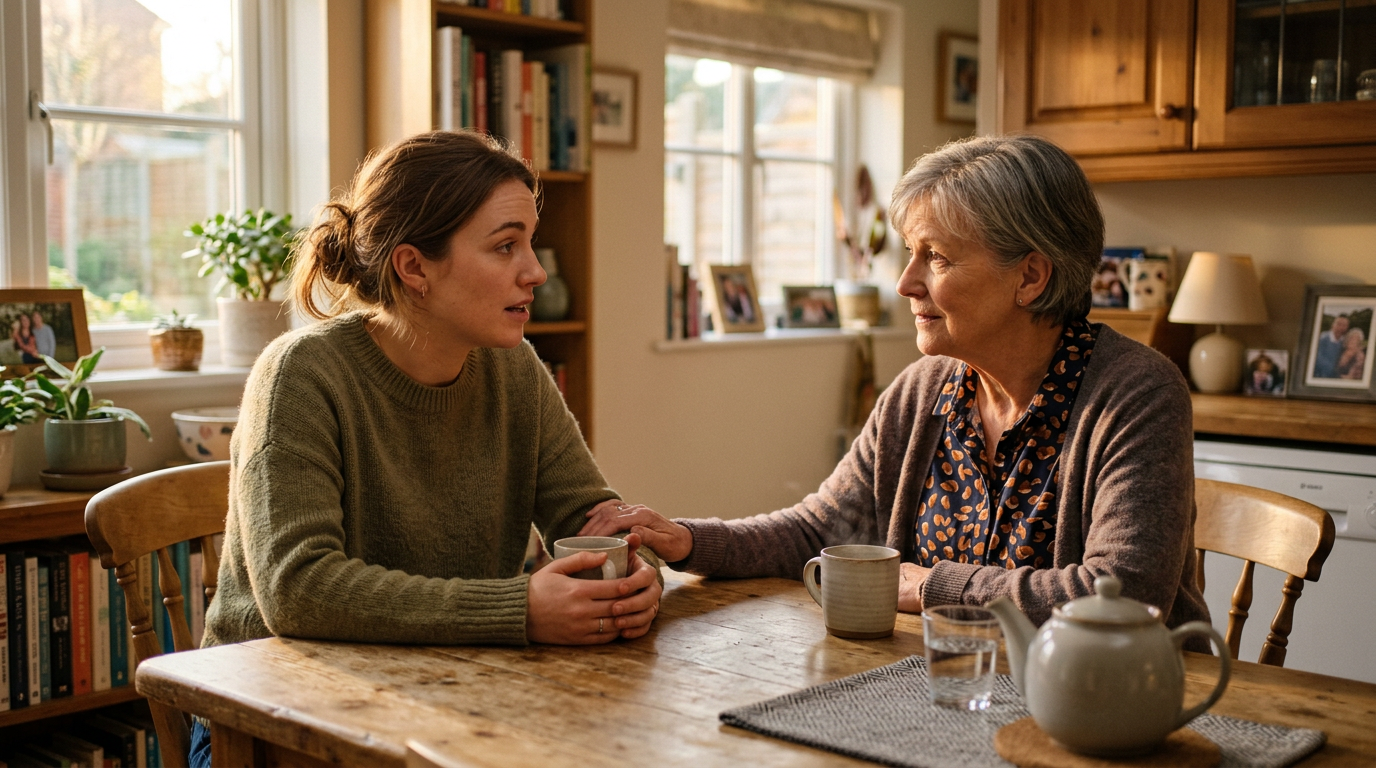
Choose a moment when the person is not rushed, not already stressed, and not in public. A quiet evening at home, when it’s just the two of you, creates the kind of space where a real conversation is actually possible. Give yourself and them the gift of the right time.
Decide who to tell first
You don’t have to tell everyone at once. Think about who in your family is most likely to respond with calm and steadiness—a trusted adult who won’t immediately spiral into reaction. That person is your starting point.
It might be a mom who has always been your safe space. It might be a sibling, an aunt, or a trusted friend who feels like family. Starting with your safest person means you’ll have at least one ally in your corner before you face the harder conversations.
How to Tell Your Parents You’re Pregnant
The hardest part is almost always the opening. Here are a few ways to begin, depending on your situation:
If you want to be direct: “There’s something I need to tell you, and I need you to hear me out before you react. I’m pregnant.”
If you’re scared of the reaction: “I need to share some news that’s been really hard for me to carry alone. I’m pregnant, and I’m scared. I really need your support right now.”
If you’re worried about being told what to do: “I have something important to tell you. I want you to know that I’m still figuring out my pregnancy options, and what I need most right now is support—not a plan made for me.”
There is no perfect version of “Mom, Dad, I’m pregnant.” But saying it out loud, even imperfectly, is the hardest part. Once the words are out, the conversation can actually begin.
What to Expect When You Tell Them
Here’s something important to understand: initial reactions are often not the final reaction.
Parents can respond to unexpected pregnancy news with shock, fear, or emotion that comes out looking like anger or disappointment—but that initial shock is rarely the full story of how they feel. Many women have had the experience of a parent reacting badly in the moment and coming around to becoming a genuine source of support within days or weeks.
You don’t have to absorb an unfair first reaction. But you also don’t have to treat it as the final one.
Common reactions—and how to handle them:
Shock or silence. Give them a moment. This is genuinely surprising news, and people need time to process. Silence isn’t rejection—it’s often just someone trying to catch up with what they’ve just heard.
Anger or disappointment. Try not to react to their reaction in the moment. You might say: “I understand this is hard to hear. I’m not asking you to be okay with it right now. I just needed you to know.” Then give them space. Come back to the conversation when everyone has had time to breathe.
Immediately telling you what to do. This is one of the most common responses—and one of the hardest to navigate. If a parent immediately pushes you toward a specific pregnancy decision, you’re allowed to say: “I appreciate that you have strong feelings about this. But this is my decision, and I need time to think through my options. I need you to offer support, not a plan.”
Tears. Sometimes a parent’s reaction is pure sadness—for you, for themselves, for what they’d imagined. That reaction, as hard as it is to witness, usually comes from love. Let them feel it. You don’t have to fix it.
Unconditional support. This happens too—more often than women fear it will. Some parents will surprise you completely and be exactly who you need them to be.
If You’re a Teen: Telling Parents About a Teen Pregnancy
If you’re younger—in high school or just starting out on your own—the fear of telling your parents can feel even more intense. Teen pregnancy carries its own weight of stigma and fear, and the power dynamics between a teenager and her parents add a layer of complexity that’s real and worth acknowledging.
A few things to keep in mind: You have rights, regardless of your age. The pregnancy decisions ahead of you are yours to make, and while your parents’ input matters, they cannot legally make those choices for you. If you are not safe in your home or fear a harmful reaction, please reach out to a trusted adult outside your family—a school counselor, a healthcare provider, or an organization like Open Arms where you can speak with someone in a confidential space before you talk to anyone at home.
You don’t have to figure this out alone, and you deserve support from someone who isn’t going to pressure you.
If the Reaction Is Truly Harmful
Most difficult reactions come from shock and fear, not from a lack of love. But some situations are genuinely unsafe—where a family member’s reaction involves threats, pressure to make a specific choice, or harm.
If you are in a situation where you are being pressured, controlled, or unsafe, you deserve support from outside your family. There are local resources and national organizations specifically for moments like this one. Open Arms is one of them. Our team is a confidential, judgment-free space where you can talk through your situation with someone who truly understands—before you make any decisions, and without any pressure toward a particular path.
Your Pregnancy Decision Belongs to You
Whatever your family says, however they react, we want to say this clearly: this is your pregnancy, and these are your choices.
Your family’s feelings matter. Their perspective can be valuable. But your unplanned pregnancy options—whether to parent, to make an adoption plan, or another path—belong to you. No parent, partner, or family member has the right to make those decisions on your behalf.
Sometimes the hardest part of telling parents about an unplanned pregnancy isn’t the conversation itself. It’s holding on to your own voice afterward, especially when the people you love are pushing hard in a particular direction.
You’re allowed to listen and still decide for yourself. You’re allowed to take time. You’re allowed to feel a hundred different things about your future and still move forward. You are in control of this.
After You Share the News
Once the pregnancy news is out, give everyone—including yourself—some time before the next round of conversations. The first conversation is about disclosure. The deeper conversations about next steps can happen once everyone has had a chance to process.
In the days that follow, pay attention to who shows up for you. Who checks in to see how you’re doing? Who makes you feel supported rather than judged or pressured? Those are the people whose input is worth weighing as you figure out your path forward.
If your family’s reaction has left you feeling more alone than before you told them, please know that support exists beyond your family. Friends, counselors, and organizations like Open Arms are here specifically for this moment.
How Open Arms Can Help
If you’re navigating an unexpected pregnancy—whether you’ve told your parents yet or not—we’re here to talk.
We can help you think through your unplanned pregnancy options without judgment. We can connect you with counseling and local resources. We can simply be a calm, caring team in your corner when everything else feels chaotic.
We serve expectant mothers throughout Washington and Arizona, and you can reach us any time—day or night. Everything you share with us is confidential.
You might also find these posts helpful as you figure out your next steps:
-
Your Options When Facing an Unplanned Pregnancy: A Complete Guide
-
I’m Pregnant and Scared: What to Do When You Feel Overwhelmed
Call or text us anytime at 206.492.4196. We’re available 24 hours a day, 7 days a week—we are here when you need us. No pressure, no judgement, and completely confidential.
You don’t have to have all the answers right now. You just have to take it one conversation at a time.